How to Start a Pressure Washing Business in a Small Town: Costs, Equipment & First Customers (2026)
A pressure washing business is one of the cheapest service businesses a small-town owner can start — and the most visible. Every spring, driveways turn green with algae and siding goes grey — and in a small town, neighbours watch the…
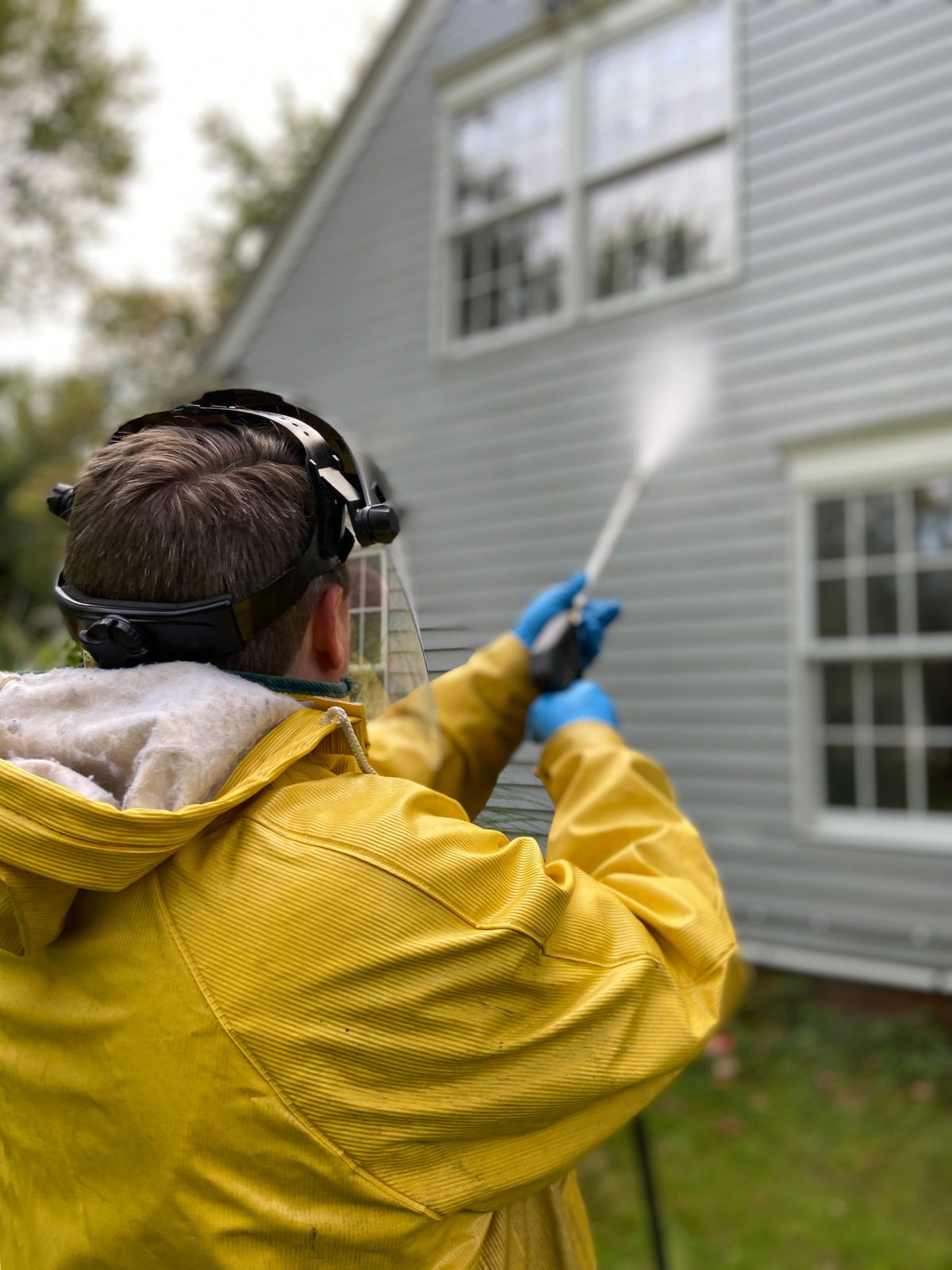
A pressure washing business is one of the cheapest service businesses a small-town owner can start — and the most visible. Every spring, driveways turn green with algae and siding goes grey — and in a small town, neighbours watch the before-and-after from their own front porch. This guide covers how to start a pressure washing business in a small town the practical way: honest startup costs, the equipment that earns its keep, pricing that keeps you profitable, and how to land first customers without paid ads.
It belongs with the other outdoor-service guides in our small town business ideas collection, and it pairs perfectly with summer lawn care and winter snow removal — one customer list can feed you all year.
The short answer: To start a pressure washing business, register your business and get liability insurance, buy a 3,000–4,000 PSI gas washer with a surface cleaner, charge $150–$400 per driveway or $300–$600 per house wash, and win first jobs with door hangers, a free Google Business Profile, and before-and-after photos. Startup costs run $3,000–$10,000.
Key takeaways
- House washing and driveways are the two money jobs — decks, fences, and patios are add-on sales to the same visit.
- Starting lean costs $3,000–$5,000 with a truck-bed setup; the washer and surface cleaner are the purchases that matter.
- Never quote by the hour — price by the job and the surface, in writing, before you start.
- Before-and-after photos are your whole marketing budget: one great driveway photo wins the next five jobs.
- It pairs with lawn care in summer and snow removal in winter — the same route, the same customers, year-round income.
The Real Numbers First: Startup Costs
The "lean" column assumes you already own a pickup truck or a trailer; the "full setup" column adds a used trailer and a second washer for bigger jobs.
| Expense | Lean startup | Full setup |
|---|---|---|
| Gas pressure washer, 3,000–4,000 PSI | $800–$1,500 | $1,500–$3,000 |
| Surface cleaner (driveway attachment) | $150–$400 | $300–$600 |
| Hoses, wands, nozzles & fittings | $200–$400 | $300–$600 |
| Water tank (200–300 gal) + buffer tank fittings | $300–$700 | $400–$900 |
| Trailer or truck-bed mount | $0 (use your truck bed) | $1,500–$3,500 |
| General liability insurance (annual) | $400–$900 | $500–$1,000 |
| Business registration + local license | $50–$300 | $50–$300 |
| Cleaning chemicals, safety gear, marketing | $300–$600 | $400–$800 |
| Typical total | $3,000–$5,000 | $6,000–$10,000 |
Startup requirements checklist: a reliable gas pressure washer (3,000 PSI minimum), a surface cleaner, 100+ feet of pressure hose, a water tank or a customer-water hookup plan, general liability insurance, a registered business name, written quotes for every job, and a phone that takes good photos. Quick tips: buy the washer new and the trailer used; keep $500 in reserve for a blown hose or a broken wand mid-season; and never start a job without insurance — one etched window or stripped paint claim can wipe out a month of revenue.
Step 1: Register the Business (Keep It Simple)
Most solo operators start as a sole proprietorship or a simple LLC. An LLC — typically $50–$500 depending on the state — separates your personal assets from the business, which matters when you are spraying 3,000 PSI water at other people's homes. Our guide on how to register an LLC walks through the seven steps, and if you plan to hire a helper later you will also need a federal tax ID; the walkthrough on how to get an EIN for your small business covers that in plain English. Open a separate business bank account and log every expense from day one — fuel, chemicals, hose replacements, and mileage are deductible.
Step 2: Handle Licenses, Insurance & Water Rules
Pressure washing rarely needs a special state license, but most towns require a general business license, and a few regulate wastewater runoff — dirty water from a driveway cannot legally flow into a storm drain in some areas. Check your city or county rules before your first job — the U.S. Small Business Administration's license and permit guide points you to exactly what your state and locality require.
Insurance is the non-negotiable: a $1 million general liability policy typically costs $400–$900 per year and covers the two classic claims — water forced behind siding, and paint or wood stripped by too much pressure. If you wash roofs or two-storey homes, tell your insurer — some policies exclude work at height unless you ask. Also confirm the water source when you quote, not when you arrive: most jobs run off the customer's outdoor spigot, but a buffer tank keeps the washer fed when pressure is low, and some rural wells run too slowly for a 4 GPM machine.
Step 3: Get Equipment That Earns Its Keep
The washer is the business, so spend your budget there first: a gas-powered machine rated at 3,000–4,000 PSI and 3–4 gallons per minute (GPM). Home-use electric washers are too slow for paid work — a job that takes four hours instead of two loses money. A belt-drive machine lasts longer than a direct-drive one — worth the premium for full-time work.
The second purchase is a surface cleaner — the round attachment that cleans driveways and patios in wide, even passes. It is the biggest time-saver you will own: a driveway that takes 90 minutes with a wand takes 30 with a 16- or 20-inch surface cleaner, and the streak-free finish is what customers photograph and show their neighbours. Add a 50-foot extension hose, nozzle tips (25-degree for general work, 40-degree for siding — never the 0-degree tip on wood or paint), a downstream chemical injector for house wash soap, and safety gear: eye protection, waterproof boots, and hearing protection.
What not to buy yet: a hot-water machine, a second washer, or a wrapped trailer. A cold-water rig handles 90% of residential work. Add hot water — which cuts grease far faster — when commercial jobs like restaurant patios come in, and let those jobs pay for it.

Step 4: Price Every Job Right — Per-Job, Never Per-Hour
Residential pressure washing in 2026 typically prices by the job and the surface, not by the hour — hourly pricing punishes you for getting faster, and customers hate open-ended bills. Here is what solo operators commonly charge:
| Service | Typical price (2026) | Typical time on site |
|---|---|---|
| Driveway (2-car, concrete) | $150–$300 | 45–90 minutes |
| House wash (single-storey siding) | $300–$500 | 2–3 hours |
| House wash (two-storey) | $450–$700 | 3–4 hours |
| Deck or patio | $150–$350 | 1–2 hours |
| Sidewalks & walkways (add-on) | +$50–$100 | 20–30 minutes |
| Fence wash (per 100 ft) | $100–$200 | 1 hour |
| Small commercial (storefront / lot) | $250–$600 | 2–4 hours |
Three rules keep you profitable. First, quote after seeing the job — a customer photo works for a driveway, but walk the property for a house wash, because algae, height, and water access change the price. Second, bundle: a driveway plus a house wash booked together costs less than the two jobs separately, and still earns you more per visit than either alone. Third, charge more in spring, when demand peaks, and offer a small discount for repeat customers — a returning customer is worth far more than a one-off job.
Step 5: Use a Written Quote for Every Job (Copy-Ready Worksheet)
Verbal prices are how disputes start — usually over what "clean the house" was supposed to include. A written quote protects both sides and looks professional from day one. Copy this worksheet and use it for every job:
Pressure Washing Job Quote — template worksheet
- Customer & property: name, address, phone, and each surface to be washed (driveway, siding, deck, walkways).
- Method per surface: pressure wash for concrete; soft wash (low pressure + soap) for siding, roofs, and painted wood.
- Price per surface + total: itemise each surface, then the total, noting any bundling discount.
- Water source: customer spigot or your onboard tank.
- What is NOT included: roof washing, gutter cleaning, stain removal on oil spots, and moving heavy furniture or potted plants.
- Payment terms: due on completion for residential work; net-15 for commercial jobs.
- Damage note: you are not responsible for pre-existing damage — loose paint, cracked concrete, or rotted wood. Photograph problem areas before you start.
Photograph every surface before you start and again after you finish. Those two photos are your proof of work, your marketing, and your defence if anyone claims damage later.
Step 6: Get Your First 10 Customers in a Small Town
Pressure washing sells itself visually, so your marketing should be visual too. Start with your own street: wash your driveway and one neighbour's at a discount, take before-and-after photos, and print door hangers with them for the surrounding streets. In a small town, one visibly clean driveway sells the next three — nobody wants the dirtiest driveway on the block.
Set up a free Google Business Profile with "pressure washing" in the description and real job photos, and ask every happy customer for a review while you are still in their driveway — reviews compound every spring. Post those before-and-after photos in local Facebook groups and on Nextdoor the week the weather turns warm — our guide on how to market a small business on Nextdoor shows how neighbourhood apps turn one good job into a whole street of bookings. And talk to realtors, property managers, and churches: a realtor who recommends you before every listing photoshoot is a referral source that never runs dry, and one small commercial lot pays like three driveways.
The Off-Season: Turn Pressure Washing Into a Year-Round Business
Pressure washing is a spring-and-summer business in most of the country, which is exactly why it pairs so well with the other outdoor services in this cluster. The same customers who pay you to wash a driveway in May need their lawn mowed all summer — and the same truck, route, and customer list work for a lawn care business. When the leaves fall, that list becomes your winter route for a snow removal business. Three seasonal services, one customer list, one set of marketing — that is how a solo operator builds a full-time income from part-time seasons. If you are choosing just one, pressure washing has the lowest startup cost of the three and the fastest payback.
Frequently Asked Questions
How much does it cost to start a pressure washing business?
A lean start costs $3,000–$5,000: a gas washer ($800–$1,500), a surface cleaner, hoses and nozzles, a water tank, insurance, registration. A full trailer-mounted setup runs $6,000–$10,000 — the washer is the biggest expense, and most owners earn it back within their first 10–20 jobs.
How much can you make pressure washing?
A solo operator charging $150–$400 per driveway and $300–$600 per house wash can gross $500–$1,500 on a good weekend day once the route is full. Part-time spring-and-summer operators commonly report $20,000–$40,000 in a season; full-time operators who add commercial work earn well past that.
Do I need a license to start a pressure washing business?
Most states do not require a special pressure washing license, but you will almost always need a local business license, and some towns regulate wastewater runoff into storm drains. Check with your city or county clerk first — and carry general liability insurance regardless.
Pressure washing vs soft washing — what is the difference?
Pressure washing uses high-pressure water and suits hard surfaces like concrete driveways and patios. Soft washing uses low pressure plus cleaning solution and suits siding, roofs, and painted wood, where high pressure would cause damage. A professional offers both and picks the method per surface — exactly what the written quote above records.
Conclusion
A pressure washing business rewards operators who buy the right washer once, price by the job, and let before-and-after photos do the selling. Keep startup costs lean, get every quote in writing, photograph everything, and build a tight route. Do that, and a single machine can produce a serious second income every spring and summer — or, paired with lawn care and snow removal, a genuine full-time business. Start with the quote worksheet above, wash your own driveway first, and let the neighbours watch.
Updated November 2026.



0 Comments
No comments yet. Be the first to share your thoughts!