How to Start a Home Childcare Business in 2026: Licensing, Costs & First Families
How to Start a Home Childcare Business in 2026: Licensing, Costs & First Families In many small towns, the hardest part of a parent's workday is not the job — it is finding someone trustworthy to watch the kids. The nearest daycare center…

How to Start a Home Childcare Business in 2026: Licensing, Costs & First Families
In many small towns, the hardest part of a parent's workday is not the job — it is finding someone trustworthy to watch the kids. The nearest daycare center may be thirty minutes away, its waiting list months long, its hours a poor match for a nurse's or factory shift. That gap is why a home childcare business works so well in a small town: parents want care close to home, from someone they know by name.
If you love children, have a spare room, and want income without leaving town, this is one of the most practical small town business ideas you can start. This guide covers licensing, costs, safety, pricing, and filling your first spots — in the order that matters.
The short answer: To start a home childcare business, check your state's licensing rules first, then childproof one room, register the business, get liability insurance, and set your weekly rates. Most providers spend $1,000–$5,000 to start, care for 4–8 children at a time, and fill their first spots through local parent groups, pediatrician offices, and word of mouth.
Key takeaways
- Licensing comes first — most states require a license once you care for more than a few unrelated children.
- Startup costs are modest: $1,000–$5,000 covers licensing, safety gear, insurance, and supplies.
- Price by the week, not the hour, and always use a written contract with a sick policy and late fees.
- In a small town, trust is your marketing: one happy family refers the next three.
The Real Numbers First: Startup Costs
Home childcare is one of the cheapest small-town businesses to start — your home is already your building. Here is what a typical solo provider spends first.
| Startup item | Typical cost | Notes |
|---|---|---|
| License application & background checks | $50–$300 | Varies by state; every adult in the home usually needs a check. |
| CPR & first-aid training | $50–$150 | Required in most states; renew every two years. |
| Liability insurance (first year) | $300–$800 | A home daycare policy, not a standard homeowner's policy. |
| Childproofing & safety gear | $200–$600 | Gates, outlet covers, cabinet locks, detectors, first-aid kit. |
| Cribs, cots, high chairs & car seats | $300–$1,000 | Buy sleep equipment new; check recalls. |
| Toys, books & learning supplies | $300–$800 | Age-appropriate toys, books, art supplies, outdoor play gear. |
| Business registration, EIN & marketing | $100–$300 | Registration fees, flyers, and a Google Business Profile listing. |
| Total to open your doors | $1,000–$5,000 | Most providers land mid-range; stricter states cost more. |
That total assumes you own the home you use. If you rent, get your landlord's written permission first — some leases forbid home businesses.
Step 1: Get Licensed Before Anything Else
Licensing is the step new providers most often skip, and the one that can shut you down. Every state regulates paid childcare, but the trigger differs: in many states you need a license once you regularly care for more than three to six unrelated children. A few states require one for a single unrelated child. Do not guess — look it up for your state.
Find your state's rules through ChildCare.gov's state licensing lookup, which links to each state's licensing agency and forms. The license is often called a "Family Child Care Home" license. The usual path:
- Take the pre-licensing training on health, safety, and child development.
- Pass background checks — every adult in your home is fingerprinted, not just you.
- Complete CPR and first-aid certification — infant and child CPR, required before the license in many states.
- Pass a home safety inspection using the checklist below.
- Apply and wait — processing takes weeks to months, so start early.
Your license also sets your legal limit on children and the adult-to-child ratio by age — babies count more heavily than preschoolers, so plan your group around the ages you want.
Step 2: Make Your Home Safe and Inspection-Ready
Parents judge your home the way an inspector does — looking for anything a toddler could reach, climb, or swallow. Set up one dedicated room as your childcare space. A clear, tidy, child-sized room tells parents you take safety seriously before they ask a question.
Use this copy-ready checklist to get inspection-ready — print it and check every line off before the inspector arrives:
- ☐ Outlet covers; cords and blind cords out of reach
- ☐ Cabinet locks on medicine, cleaners, and sharp tools
- ☐ Safety gates on stairs and off-limits rooms
- ☐ A fenced yard or a supervised outdoor-time plan
- ☐ A safe sleep space for each baby — a crib or play yard meeting current standards
- ☐ Smoke and CO detectors on every level, tested monthly
- ☐ A stocked first-aid kit and a written emergency plan posted visibly
- ☐ Allergy lists for every child posted in the kitchen
- ☐ Hot water below scalding temperature; supplies locked away
- ☐ A daily cleaning routine for toys and surfaces
Keep a simple log of safety checks — detector tests, toy cleaning, fire drills. Inspectors notice it.
Step 3: Register the Business and Protect Yourself
Once licensing is underway, make the business official. Many home providers form an LLC, because it separates your personal assets from the business if anything goes wrong. Learning how much it costs to form an LLC is a quick check: in most states the filing fee is modest, and you can file online in an afternoon. The U.S. Small Business Administration's guide to launching a business walks through the same steps for any new business.
Three pieces of paperwork matter most:
- An EIN (Employer Identification Number). Free from the IRS; it lets you open a business bank account without using your Social Security number. See our guide on how to get an EIN for your small business.
- Liability insurance. Ask your insurer for a home daycare policy or a business rider. A standard homeowner's policy usually does not cover injuries to children in your care.
- A written parent contract and handbook. Cover your hours, rates, late pickup fees, sick-child policy, holidays, and what happens when you are ill. Parents respect clear rules, and a contract prevents the awkward conversations that end friendships.
Open a separate business bank account on day one and run every payment through it. Mixing daycare money with household money turns tax time into a mess.
Step 4: Decide What to Charge
Home childcare usually costs parents less than a daycare center — that is your selling point — but do not price yourself out of a living. Call two or three licensed providers within twenty miles and ask their weekly rates first. In small towns, full-time home care commonly runs $150–$280 per child per week, with babies at the top.
| Care type | Typical small-town rate | Notes |
|---|---|---|
| Full-time infant (under 1 year) | $180–$280 / week | Bottles and diapers provided by parents. |
| Full-time toddler (1–2 years) | $160–$250 / week | Meals and snacks often included. |
| Full-time preschool (3–5 years) | $150–$220 / week | Learning activities and crafts included. |
| Part-time (2–3 days a week) | $25–$45 / day | A daily rate keeps billing simple. |
| Before / after school | $80–$150 / week | School pickup, snack, homework time. |
| Drop-in or hourly care | $8–$15 / hour | Offer only when you have a free spot. |
Rates vary by state and county, so treat these as a starting point. Charge weekly, in advance, and keep the rate the same whether a child attends four days or five — that keeps your income steady when a family takes a vacation.
Step 5: Fill Your First Spots
You do not need paid ads to fill a home daycare in a small town. Parents find childcare the way they find everything else: they ask someone they trust. Put yourself where those conversations happen.
- Leave flyers where parents go: the pediatrician's waiting room, the library board, the church nursery, the grocery store.
- Join local parent groups online — town Facebook groups are where "does anyone know a good sitter?" gets asked every week.
- Set up a free Google Business Profile. When a parent searches "childcare near me," a profile with photos, hours, and reviews puts you on the map — follow our Google Business Profile checklist.
- Offer a trial morning. Parents who watch their child settle happily into your playroom rarely keep shopping.
- Ask every happy parent for a review — two or three genuine Google reviews beat a paid ad in a small town.
Maria, who runs a licensed home daycare for six children in a town of 4,000, filled all six spots in five weeks without paid advertising: a flyer at the pediatrician's office brought two families, a Facebook parent group brought two more, and the first two families referred the last two.
The same families later look for a tutoring business, so keep those relationships warm after children age out.
A Simple Daily Schedule Parents Love
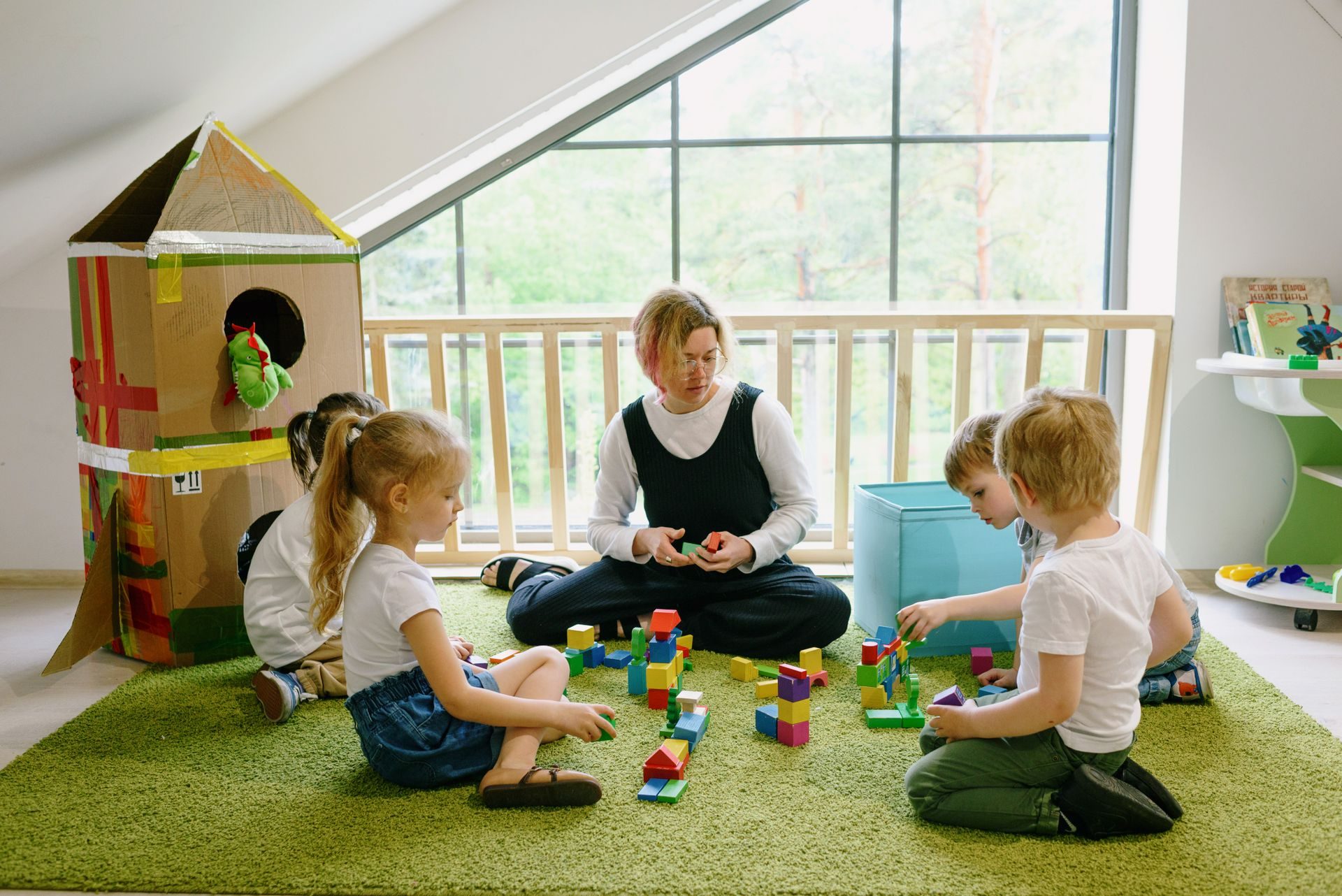
Parents choose home childcare for the small, calm feeling a big center cannot copy. A predictable daily rhythm creates it — no curriculum needed, just a routine children can count on. Send parents a photo or two during the day: a block tower, a painting, a circle-time moment. It costs ten seconds and it is why parents renew.
A typical day: 7:30–9:00 arrival and free play, 9:00 circle time and snack, 9:30 outdoor play, 10:30 crafts, 11:30 lunch, 12:30–2:30 nap, then snack, stories, and pickups from 4:00. Keep the same order daily — children relax when they know what comes next.
5 Mistakes New Providers Make
- Underpricing to fill spots fast. A low rate fills your house and empties your patience. Price fairly.
- Skipping the written contract. Verbal agreements fail at the first late pickup or unpaid week. Put it in writing before day one.
- No sick policy. Decide now what fever keeps a child home and for how long, and enforce it for everyone.
- Mixing business and household money. One bank account for the business, one for the house.
- Taking too many children too fast. Start with three or four, learn your rhythm, then add one family at a time.
Frequently Asked Questions
Do I need a license to watch children from my home?
In most states, yes — once you regularly care for more than a small number of unrelated children, usually three to six. Check your state's licensing agency through ChildCare.gov before you take your first paying family.
How much money can a home childcare business make?
It depends on your rates and your licensed capacity. For example, six children at $200 a week is $1,200 a week, about $62,000 a year gross — before food, supplies, insurance, and taxes.
Can I run a home daycare from a rented house?
Often yes, but you need two permissions first: your landlord's written approval, and confirmation that local zoning allows a home childcare business at that address. Check both before spending money on licensing or equipment.
Do I need a degree to start a home childcare business?
Usually no degree is required. Most states require CPR and first-aid certification plus a set number of training hours each year. A background in teaching or childcare helps parents trust you faster, but it is not a legal requirement in most states.
Conclusion
Starting a home childcare business is one of the most honest ways to earn a living in a small town: you solve a real problem for working parents, work from your own home, and build on trust instead of advertising. Start with the license, make the house safe, put the paperwork in place, and price your care fairly. Then open your door to three or four families and let word of mouth do the rest.
Home childcare is just one of the businesses that thrive in small towns — if it is not the right fit, the pillar guide lists fourteen more ideas with the same small-town advantages: low startup costs, local trust, and customers down the road.
Updated November 2026. Rules, ratios, and rates vary by state — confirm current requirements with your state's licensing agency before enrolling children.



0 Comments
No comments yet. Be the first to share your thoughts!